
 EN
 ES
 PT
 RU
 AR
 KO
 MY
 FIL
 BE

High-Performance Bus HVAC Blowers: Ensuring Passenger Comfort and Safety
On a bus, the HVAC blower does more than move air. It carries heated or cooled air to passengers and, through the windshield defrost circuit, keeps the driver's view clear in fog, rain, and cold. A weak or noisy blower undermines both comfort and safety: slow demist reduces visibility, and a stuffy cabin or excess fan noise raises fatigue and distraction on long routes. Specify the blower by the bus HVAC module, not by a "high-performance" label. The variables that decide the result are voltage, airflow and static pressure, brushless versus brushed design, speed control, noise, mounting size, and duty life. Weili's bus evaporator blower range covers brushed and brushless 24V centrifugal units in common bus sizes, so the right choice depends on the specific module and route duty.
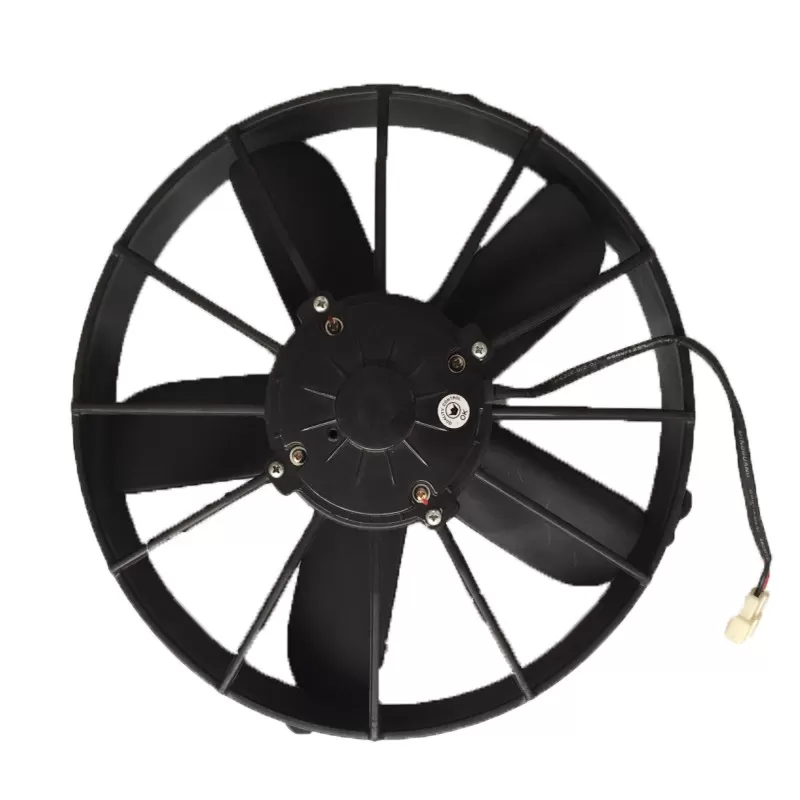
Why a bus blower is a safety item, not just a comfort item
Comfort and safety overlap on a bus because the same airflow serves both. Even temperature and steady circulation keep passengers calm on a 12-hour shift, but the defrost path is the safety-critical one. The windshield clears only as fast as the blower can push warm, dry air across it; a failing motor in a humid winter morning leaves the glass fogged while the driver is already moving. Noise is the second safety link. A whining or unbalanced blower draws the driver's attention and masks cabin alerts. Reliability is the third: a blower that quits mid-route removes heating, cooling, and demist at once. Treat blower selection as a safety specification, then optimize comfort within it.
Bus-specific selection variables
Start from the HVAC module fitted to the bus, then confirm each variable against the duty cycle. The table lists what to check and why it matters for a passenger vehicle.
| Variable | What to confirm | Why it matters on a bus |
|---|---|---|
| Voltage | 24V is typical for buses; confirm against 12V systems | Wrong voltage destroys the motor or leaves it dead on fit |
| Airflow and static pressure | Match the evaporator box; request CFM and pressure | Low pressure starves rear rows and the defrost path |
| Brushed versus brushless | Life, noise, efficiency versus unit cost | Decides service interval on high-duty city loops |
| Speed control | Resistor, 4-speed, or ECU signal | Granular control improves comfort and defrost response |
| Noise | Confirm decibel level at the operating point | Protects driver focus and passenger experience |
| Size and mounting | 335mm, 345mm, 351mm are common bus sizes | Wrong footprint will not seat in the evaporator housing |
| Duty life | Some listings show 6000-hour motors | Route hours per year set the realistic replacement interval |
| Configuration | Single, double, or twin blower | Larger coaches need twin units to cover the cabin |
Brushed versus brushless on a transit route
Weili's range includes both designs, so the trade-off is a real buying decision rather than a spec sheet footnote. Brushed units with an internal resistor are proven and lower cost, which suits lighter-duty or price-sensitive fleets. Brushless units run cooler, quieter, and longer, which pays back on high-cycle city buses where the blower runs most of the day. The constraint is upfront price and the need to confirm the control interface. Choose brushless where duty hours and noise limits dominate, and brushed where first cost and simple service matter more. Confirm the control type, because a brushless motor still needs a compatible drive signal.
What to confirm before you order
A precise request shortens the fit loop and prevents a return. Provide the following so a supplier can validate the blower against the actual module instead of guessing:
- Bus model and the fitted HVAC or evaporator module.
- System voltage (12V or 24V) and the speed-control type (resistor, 4-speed, or ECU).
- Required airflow and static pressure, or the original part number.
- Mounting footprint and the blower diameter (for example 335mm, 345mm, or 351mm).
- Whether the layout needs a single, double, or twin blower.
- Noise limit at the operating point and the annual route hours.
- Worst-case climate, because heat and humidity drive the defrost and airflow demand.
Where any value is unknown, name it as a confirmation point. A blower can only be validated against the real module specification, not against a photo or a nominal size.
Send your bus model, HVAC module, and the variables above to Weili for a fit review and quote. Include the original blower part number and the required voltage and diameter so the team can match a brushed or brushless unit from the bus evaporator blower range. Contact Weili or review the application coverage for buses and new-energy vehicles.
Frequently asked questions
How does a failing blower threaten bus safety, not just comfort?
A weak blower slows windshield demist in rain, cold, or humidity, which delays the driver's clear view at the worst moment, and a loud or unbalanced unit competes for the driver's attention. Because one motor serves heating, cooling, and defrost together, its failure removes all three at once. Confirm any local visibility or cabin-air requirements with the bus builder or regulator rather than assuming a generic spec covers them.
Brushed or brushless for city buses?
Brushless pays back on high-duty city loops where the blower runs most of the day: longer life, lower noise, and less heat. Brushed with an internal resistor stays cheaper and simpler to service, which suits lighter duty or budget fleets. The deciding inputs are annual route hours, the noise limit, and whether the HVAC controller can drive a brushless unit.
How do I confirm a replacement blower fits my bus HVAC module?
Match the voltage, the mounting footprint, the blower diameter, and the speed-control type, plus whether the layout is single, double, or twin. Weili lists common bus sizes such as 335mm, 345mm (double, with resistor), and 351mm (twin) units, and both brushed and brushless 24V families. Send the original part number and those dimensions to confirm before ordering.
Do Weili blowers carry certifications?
Product pages in this range reference TS16949 and ISO9001, and several list a stated 13-month warranty. Those references support a quality-system background but are not proof of a specific noise, pressure, or life rating. Request the current certificate, the issuing body, the scope it covers, and the written warranty terms, then confirm them against your route duty and climate.
What noise level should I specify for passenger comfort?
Specify a decibel target at the normal operating speed, not just "low noise", because cabin acoustics vary by bus model. Weili lists low-noise blower options in the range, so state the limit and the measurement point so the supplier can confirm a unit that protects both comfort and driver focus.