
 EN
 ES
 PT
 RU
 AR
 KO
 MY
 FIL
 BE

Breathe Easy: High-Efficiency AC Blower Fans for Commercial Fleets
Why "breathe easy" starts with the blower fan
In a commercial cab or bus, the air-conditioning compressor makes cold air, but the blower fan is what actually delivers it to the people. A weak or inefficient blower means uneven cabin temperature, a fogged windshield that clears slowly, and a driver who is tired of fighting the climate instead of the road. "Breathe easy" is both literal and practical: steady, well-distributed cabin airflow keeps the driver alert and the load comfortable, and a high-efficiency fan does that without quietly draining the alternator, the battery, or — on electric and stop-start vehicles — the drive range. For fleet buyers, blower efficiency is not a comfort footnote; it is a measurable operating cost.
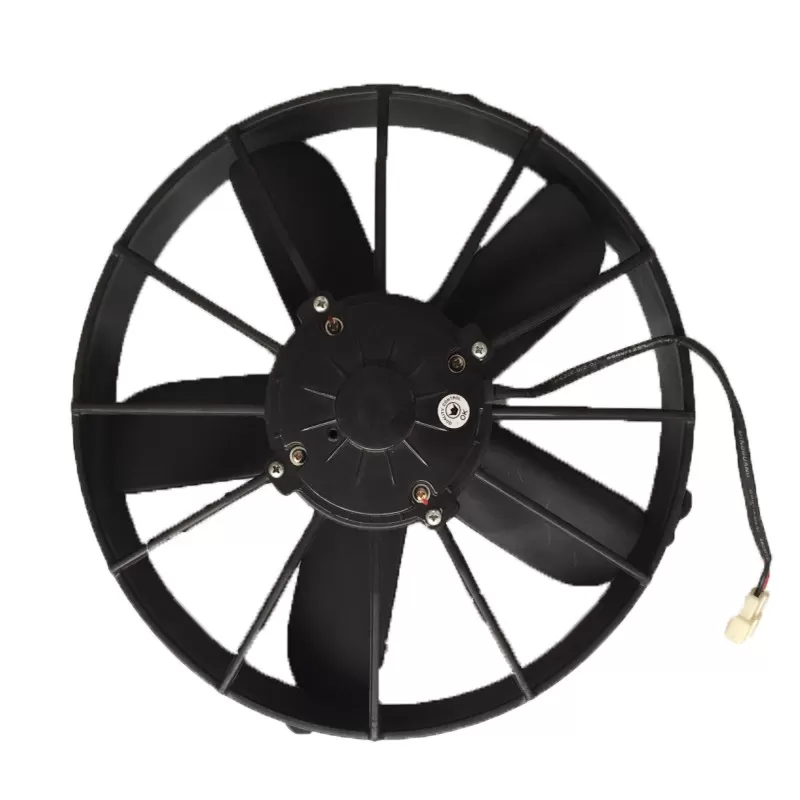
What efficiency means for a fleet
A blower's job is to push a required volume of air through the cabin duct and the evaporator coil at a given static pressure. The less electrical power that takes, the better. The cost shows up in several places:
- Alternator load and fuel (diesel and gas fleets): every amp the blower draws is alternator load the engine pays for.
- Battery and range (EV and hybrid fleets): cabin HVAC is a major auxiliary draw; a lower-watt blower directly protects driving range.
- Heat and reliability: wasted power becomes motor heat, which shortens life in a hot cab environment.
- Noise and driver fatigue: efficient brushless designs run smoother at the speeds drivers actually use.
- Lifecycle cost: a longer-lived motor means fewer removals across a large fleet.
What actually makes a blower high-efficiency
Efficiency is engineered, not claimed. Four design choices separate a high-efficiency blower from a basic one:
- Brushless (BLDC) motor: no commutator or brush friction losses, so more of the input power becomes airflow. As our guide on brushed and brushless fans explains, brushed motors wear at the commutator; brushless motors have no mechanical wear point.
- Proportional (PWM) control: instead of fixed resistor steps that shed excess energy as heat, PWM varies motor speed precisely, so the fan draws only what the cabin needs.
- Wide voltage tolerance: a 16–32V range with a 16V start means the blower keeps delivering during the voltage sag that happens when an engine idles or a battery is stressed.
- Impeller and sealed design: an optimized centrifugal impeller and a sealed, temperature-rated housing protect performance where it matters — at the installed static pressure, not free air.
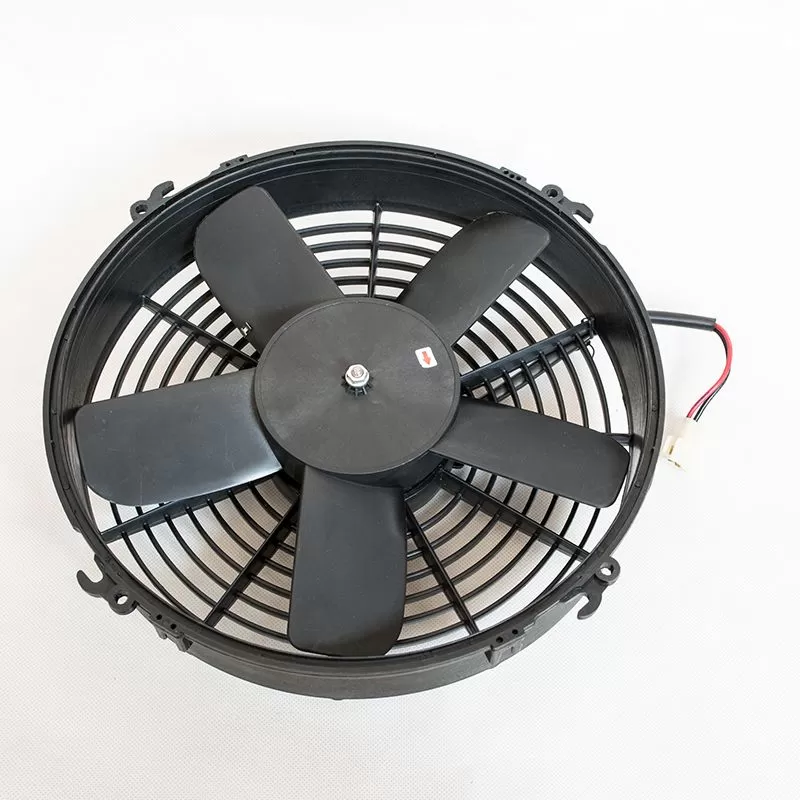
Verified efficiency-grade blowers from the Weili range
The numbers below are Weili product-page specifications. Notice the airflow is quoted at 100 Pa static pressure — the honest comparison point, not free-air rating:
| Model | Type | Airflow @100 Pa | Power / current | Duty rating |
|---|---|---|---|---|
| 24V BLDC centrifugal | Brushless, PWM | ~600 m³/h | 160 W, ≤8.5 A | −40 to +85 °C, ≥25,000 h |
| ZHF2101ZW | Brushless centrifugal | ≥1000 m³/h | 26 V test, ≤12.5 A | 24 V commercial duty |
| ZHF2827A (345 mm twin) | Brushed, with resistor | ≥1100 m³/h | ≤13.0 A, 4100 rpm | Bus evaporator |
| ZHF2101Z (351 mm twin) | Brushed, with resistor | ≥1000 m³/h | ≤12.5/27.0 A, 3900 rpm | Bus evaporator |
The 24V BLDC centrifugal blower is the efficiency reference point: at 100 Pa it delivers about 600 m³/h at 160 W, controlled by PWM across a 16–32V range and rated for −40 to +85 °C with a ≥25,000-hour life. For fleets, that combination — low draw, proportional control, wide voltage, long life — is what "high-efficiency" looks like on paper and on the balance sheet.
Brushless vs brushed: the fleet trade-off
Brushless wins on efficiency, life, and smooth control, which is why it suits high-duty, long-idle, and electric fleets. Brushed blowers with internal resistors are simpler and often lower cost up front, and they remain a sound choice for lighter-duty routes where the duty cycle is mild. The decision should follow the route profile, not the brochure. Specify the motor type deliberately, because it changes both energy draw and the spare-inventory plan.
"Breathe easy": airflow, circulation, and cabin air
A strong, evenly distributed airflow is what lets a driver "breathe easy" on a long shift — and it supports the defrost path that keeps the windshield clear. Cabin air quality, though, depends on more than the blower: the cabin filter and regular coil and duct maintenance do the real filtration work. A high-efficiency blower's contribution is to keep air moving consistently so circulation and defrost do not falter when the cabin is fully loaded or the outside temperature is extreme. Our piece on why the evaporator blower motor is essential covers the blower's role in the loop in more detail.
Specifying an efficient blower for your fleet
To buy on efficiency rather than appearance, request from the supplier: airflow at the installed static pressure (not free air), rated power and current draw, motor type and control method (PWM specification), operating voltage range and start voltage, lifetime hours and temperature range, and the physical size and mount (common commercial sizes are 335, 345, and 351 mm, single or twin). Match voltage to the vehicle and confirm the housing fits the evaporator box. Record the model per vehicle so replacements stay consistent across the fleet.
Putting efficiency to work across a mixed fleet
Fleets rarely run one vehicle type, and the payback of an efficient blower changes with the powertrain. On diesel and gas trucks the saving is alternator load converted to fuel; on electric and hybrid vehicles the same watt saved is range and battery life kept in reserve; on idling delivery vans the blower may run for hours at a stop, so a lower draw compounds across the shift. The practical move is to standardize on an efficiency-rated blower for the high-duty and electric share of the fleet first, keep a documented brushed option for mild-duty units, and track blower removals and warranty returns by model. Over a few seasons that data shows whether the efficiency premium paid off — and tells you which model to standardize on next.
FAQs
Do high-efficiency blowers really save fuel?
Indirectly but measurably. On diesel and gas fleets they reduce alternator load; on electric and hybrid fleets they directly reduce auxiliary battery draw and protect range. The saving per vehicle is small, but across a large fleet over years it is real.
Is brushless always the right choice?
Not always. Brushless leads on efficiency, life, and control, but brushed units are simpler and lower cost up front. Match the motor type to the duty cycle — high-idle, long-haul, and electric routes favor brushless; mild-duty routes can use brushed.
Why quote airflow at 100 Pa instead of free air?
Free-air figures ignore the duct and coil resistance the blower must overcome in service. Static-pressure airflow reflects real installed performance, so it is the fair way to compare units.
Will a more efficient blower improve cabin air quality?
It improves circulation and consistent delivery, which supports comfort and defrost. Filtration itself comes from the cabin filter and coil/duct maintenance, not the blower motor.
Are these figures guaranteed for my application?
The airflow, voltage, current, power, and life figures above are Weili product-page specifications for the named models. Confirm the exact rating, current certification scope (for example TS16949/ISO9001 references on the site), and written warranty terms with the supplier for your application, and verify physical fitment to the installed evaporator box.