
 EN
 ES
 PT
 RU
 AR
 KO
 MY
 FIL
 BE

How to Choose the Right Commercial Vehicle Air Conditioning Parts for Your Fleet
Start from the failure that actually costs you
Choosing commercial-vehicle AC parts for a fleet is not a catalogue exercise — it is a downtime-and-cost decision repeated hundreds of times a year. The cheapest unit price is worthless if the part does not fit, fails early, or takes the vehicle off the road during peak season. The objective is not "the best brand" but the right part, correctly specified, for each vehicle and duty, bought from a supplier you can actually hold to account. This guide is written for fleet maintenance managers, workshop leaders, and parts buyers who approve repeat AC purchases across trucks, buses, and off-road machines. It gives a repeatable selection process rather than a single product recommendation, and it keeps every claim checkable against the component's verified specification.
Step 1 — Build a per-vehicle AC inventory
Before any purchase, map the fleet by air-conditioning system, not by "truck" or "bus." For each vehicle or sub-fleet record: the AC compressor brand and model (this decides clutch fitment), system voltage (almost always 24 V in heavy commercial use, but confirm), the condenser fan and evaporator blower part numbers already fitted, and the duty profile (urban stop-start, long-haul, refrigerated, dusty/off-road). Group vehicles that share the same compressor and blower so a single validated part can cover many units. Our guide on bulk sourcing commercial AC components shows why grouping by exact application and revision — not by broad labels — is what makes any volume order safe.
Step 2 — Prioritize parts by failure risk, not by price
Not every AC component carries the same downtime risk. Rank replacement candidates by how often they fail and how hard they are to reach:
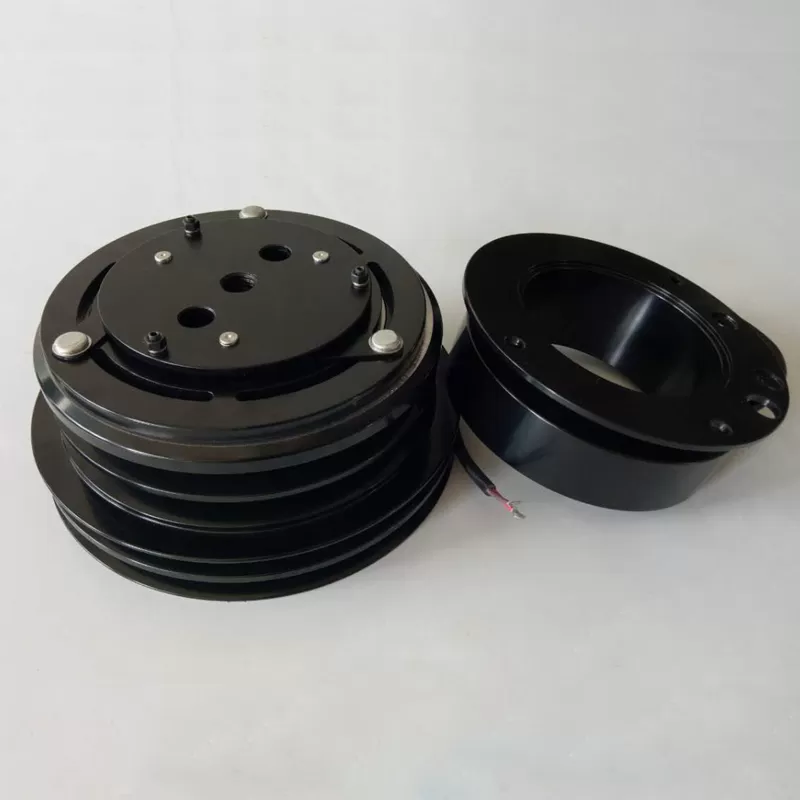
- Compressor clutch and pulley. The highest-stakes item. The clutch engages and disengages the compressor thousands of times; dust, heat, and belt misalignment wear the bearing and friction face first. A wrong pulley diameter or groove type means a return, not just a comeback.
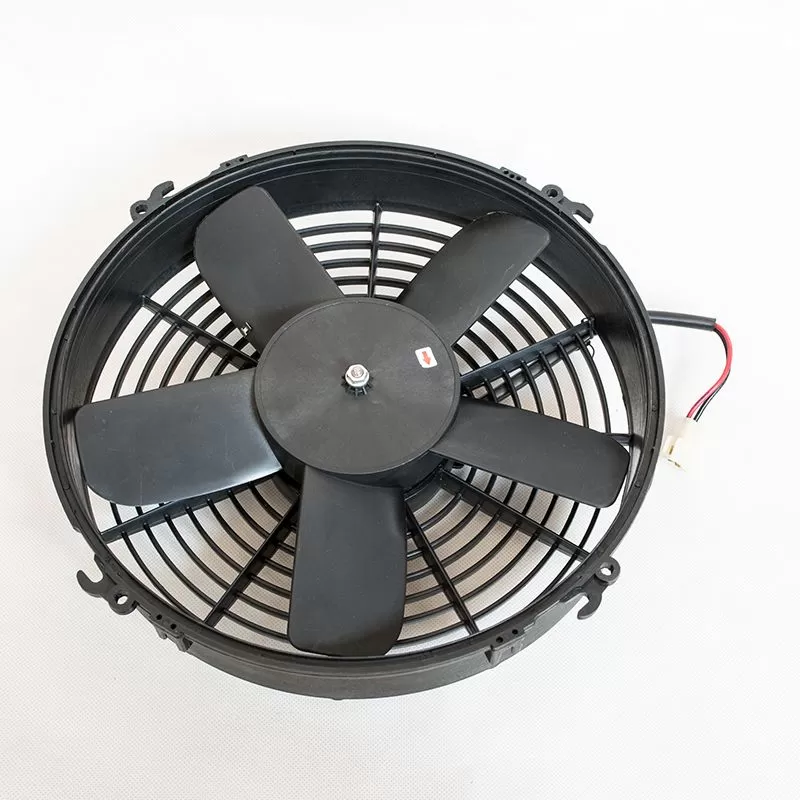
- Condenser fan. Protects high-side performance at idle and low road speed; failure shows up as summer overheating and lost cooling.
- Evaporator blower. Moves the conditioned air into the cabin; failure turns a working system into a hot cab and an unproductive operator.
- Support parts. resistors, mounts, harnesses — low cost but frequent, and worth standardizing to cut SKU count.
Spend your validation effort on the clutch and fans first; that is where a bad choice is most expensive.
A worked example makes the ranking concrete. Take a mixed urban-delivery fleet where the dominant failure pattern is summer cabin-complaint callouts: the root causes almost always trace to a slipping clutch (belt misalignment and heat), a condenser fan that cannot hold airflow at idle, or a blower struggling against a clogged cabin filter. The right response is not "buy the cheapest clutch, fan, and blower" but to validate one clutch platform per compressor, one condenser-fan family rated for the worst idle heat, and one blower type matched to the cabin's static pressure — then stock exactly those. The same logic, applied to a refrigerated or off-road sub-fleet, simply shifts the weighting toward the clutch (more duty cycles) and a brushless blower (dust and heat), but the process does not change.
Step 3 — Match the clutch to the actual compressor
For belt-driven systems, the decisive specification is the electromagnetic clutch. Weili manufactures 24 V clutches for several major compressor platforms; the verified dimensions below are the fitment checklist to cross-reference against the compressor already on the vehicle:
| Clutch platform | Voltage / coil | Pulley diameter | Groove | Typical application |
|---|---|---|---|---|
| Thermo King X426 / X430 | 24 V | φ210 mm | 2B | Transport / bus AC compressors |
| Valeo TM65 | 24 V / 60 W | φ260 / φ210 mm | 2A–2B | Heavy-duty AC compressors |
| Bitzer / Bock | 24 V | φ200 mm | 2B | Bus / refrigeration compressors |
| Hispacold | 24 V | φ210 mm | 2B | Bus / coach AC compressors |
Pulley diameter, groove type (single or double V-belt), voltage, and coil power must match the installed compressor. Whether a given platform fits a specific vehicle is a fitment question to confirm with the supplier against the actual compressor model — these dimensions are product specifications, not a guarantee of direct fit to any particular fleet unit.
Step 4 — Specify fans and blowers by duty, not by headline airflow
Airflow on a data sheet is usually free-air; what matters in service is airflow at the system's static pressure (100 Pa is the common test point) and behaviour under heat and voltage sag. Weili's verified blower and fan range gives concrete duty-rated options:
| Component | Type | Voltage | Airflow @100 Pa | Durability note |
|---|---|---|---|---|
| ZHF2602DZ blower | Brushed centrifugal | 24 V (test 27 / 13.5 V) | ≥800 m³/h | Engineering-vehicle model, 3700±200 rpm |
| BLDC centrifugal blower | Brushless | DC24 V (16–32 V) | ≥600 m³/h | ≥25,000 h, −40 to +85°C, PWM |
| ZHF2101ZW blower | Brushless centrifugal | 24 V (test 26 V) | ≥1000 m³/h | High-airflow option, ≤12.5 A |
| ZHF2317 blower | Brushed centrifugal | 24 V (test 27 / 13.5 V) | ≥800 m³/h | 6000-hour class, 3600±200 rpm |
For condenser service, the brushless axial fans (for example the 340 W and 500 W heavy-duty 24 V units, IP68-sealed with PWM control and wide temperature range) suit high-heat, high-vibration duty. The key is to choose the motor type by duty: brushless for long-shift, high-dust, or high-heat routes because it removes the brush wear point and tolerates wider voltage; brushed for lighter seasonal use where first cost dominates. Our piece on choosing the right AC blower walks through the brushed-versus-brushless trade in more depth.
Step 5 — Standardize into a fleet parts matrix
Once validated, compress the bill of materials into a small matrix: one approved clutch per compressor platform, one or two blower types per cabin class, one condenser fan family, and a short list of support parts. A tight matrix cuts emergency expediting, simplifies training, and makes warranty claims cleaner. Resist adding "just-in-case" alternates — every extra SKU is inventory and mis-pick risk. Where the OEM-versus-aftermarket question is still open on a compressor, our dedicated comparison of OEM vs aftermarket AC compressor parts for fleets frames it as cost per successful service interval, not purchase price.
Step 6 — Qualify the supplier on evidence
A fleet buyer is really buying the supplier's discipline. Before committing volume, request: the certificate scope (the components here are produced under TS16949 / ISO9001 quality systems), traceability and change-control terms, the written warranty applicable to your application, and a sample you can bench- and field-test. Treat the quality-system references and any stated warranty period as confirmation points, not as proof of a specific temperature or lifespan rating — ask for the current certificate scope and the written terms for your use. Confirm the supplier can cross-reference your existing part numbers so ordering stays repeatable.
A practical RFQ template for AC parts
Send the supplier a comparable specification so quotes are actually comparable:
- Vehicle / AC unit and the existing compressor brand and model (drives clutch fitment).
- Clutch: pulley diameter, groove type, voltage, coil power.
- Blower / fan: system voltage, airflow at static pressure (not free air), mounting geometry, rotation, control interface (PWM if brushless).
- Duty envelope: ambient temperature range, dust class, vibration level.
- Required documents: certificate scope, warranty terms, traceability, sample availability.
FAQs
Should I buy complete compressors or just service parts?
For mature applications, replacing the clutch, pulley, or bearing — rather than the whole compressor — is usually cheaper and faster, provided the core is sound. Reserve complete-compressor swaps for confirmed internal failure. Match any clutch to the installed compressor model first.
How many blower or fan types should one fleet standardize on?
As few as cover every cabin and condenser class you run. Two blower families (a brushed economy and a brushless heavy-duty) plus one condenser-fan family is often enough for a mixed fleet; more SKUs mostly add inventory and mis-pick risk.
Do the quality certifications guarantee performance in my climate?
The components are manufactured under TS16949 / ISO9001 systems, and some carry a stated warranty, but these are quality-system and commercial facts, not specific temperature or life guarantees. Request the current certificate scope and written warranty terms for your application and duty.
Is a brushless fan worth the higher cost fleet-wide?
On long-shift, high-heat, or dusty routes, usually yes — the brushless option removes the brush wear point and tolerates a wider voltage and temperature window. On light or seasonal duty, a sealed brushed unit is often the better value. Decide by duty, not by a single price tag.