
 EN
 ES
 PT
 RU
 AR
 KO
 MY
 FIL
 BE

The Ultimate Guide to Refrigerated Truck Cooling Systems and Spare Parts
A refrigerated truck is a mobile cold-chain link, not just a vehicle with a stronger air conditioner. When the cooling system drifts above setpoint, the cost is not a comfort complaint — it is spoiled pharmaceuticals, rejected food loads, failed audits, and contract penalties. That makes the refrigeration loop and its spare parts a reliability decision, not a commodity purchase. This guide walks fleet operators, cold-chain logistics buyers, and service workshops through how a refrigerated-truck cooling system works, which components fail most often, how to specify replacement parts so they actually fit and perform, and what to keep on the shelf. The goal is to turn "order a part" into a verified, repeatable process.
Cold-chain lanes are also increasingly governed by food-safety and pharmaceutical handling rules, so a setpoint breach is both a commercial loss and a compliance event. That is why this guide favors verification over assumption at every step: confirm the part, confirm the operating point, and confirm the cause before you spend.
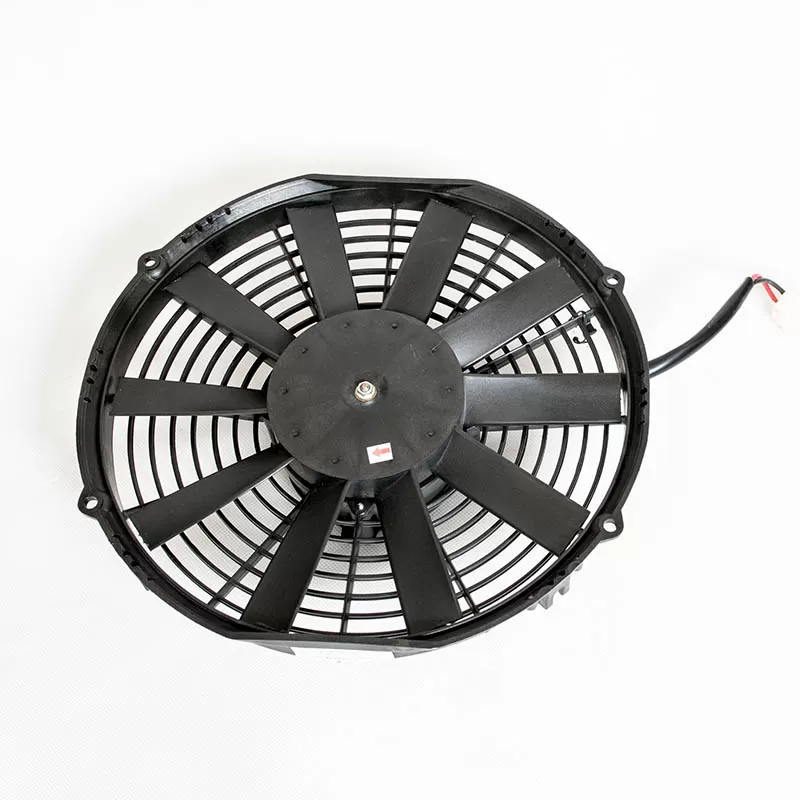
How a refrigerated truck cooling system works
A transport refrigeration unit is a self-contained vapor-compression loop mounted to the truck or trailer. The compressor is typically belt-driven from the engine — or electrically driven on many electric and hybrid units — and is engaged by an electromagnetic clutch. It draws low-pressure refrigerant vapor from the evaporator and discharges it as hot, high-pressure gas to the condenser. The condenser fan forces ambient air through the condenser coil so the refrigerant rejects heat and condenses to a high-pressure liquid. That liquid passes through an expansion device and enters the evaporator inside the cargo box, where it absorbs heat from the air the evaporator blower circulates. The cycle repeats. Two fans do most of the visible work: the condenser fan protects high-side performance at idle and low road speed, and the evaporator blower moves conditioned air through the box.
Road, standby, and the pull-down problem
A refrigerated unit does two different jobs. Pull-down is the hard work of cooling a warm box — or a just-loaded warm product — to setpoint, usually with the engine driving the compressor at road speed. Hold is the easier steady state once temperature is stable. The trap is standby: when the truck is parked at a dock with the engine off, many units switch to an electric standby compressor or a separate standby fan circuit. If that standby fan or clutch is weak, the box warms during what should be a safe stop. Specifying spares has to cover both the road compressor clutch and the standby air movers, because a failure in either one breaks the chain.
The parts that fail first — and the spares that matter
In practice, repeat failures trace back to a short list of components:
- Electromagnetic clutch and pulley. On belt-driven compressors the clutch is the wear item that engages and disengages the compressor thousands of times per trip. A slipping or seized clutch mimics compressor failure, so it should be confirmed independently before the whole compressor is condemned. Weili supplies 24V compressor clutches matched to common transport-refrigeration platforms, including Thermo King X426/430 (φ210 mm, 2-groove), Valeo TM65 (24V, 60W; φ260/φ210 mm, 2A–2B), Bitzer/Bock variants used on Yutong applications, and Hispacold (φ210 mm, 2-groove).
- Condenser fan. Weak or wrong-direction airflow raises high-side pressure and shortens compressor life. Weili's transport-refrigeration fan range covers the operating points cold-chain units need: model LNF2924H5X delivers ≥1800 m³/h at 100 Pa (27V/13.5V, ≤6.0A/10.0A, 2700 rpm), LNF2211BX delivers ≥1400 m³/h at 100 Pa (≤6.5A/10.5A, 2800 rpm), and the 8-inch LNF2208BX pulled fan delivers ≥1000 m³/h at 100 Pa (≤4.0A/7.0A, 3100 rpm) for van, truck, and milk-run bodies.
- Evaporator blower. This is the air mover inside the box or cab. Weili offers 24V evaporator blowers in brushed (including 4-speed zhf2601z and models with a built-in resistor) and brushless configurations, with motor-life figures such as 6000 hours on selected units.
- Supporting items. Radiators, defrosters, water pumps, and motors round out the catalog and matter when a secondary loop or a cab-comfort circuit shares the system.
Brushed or brushless — a real decision, not a label
Brushed fans use a carbon-brush and commutator for mechanical commutation; the brushes wear and eventually need replacement. Brushless fans use a Hall sensor and controller for electronic commutation, with no mechanical wear point. For high-duty cold-chain routes — long idle at delivery docks, frequent stop-start, ambient heat — brushless motors usually earn their cost through longer life and steadier output. Brushless units also tend to run quieter and cooler at the controller, an advantage inside a confined machinery bay where heat soaks the surroundings. For lighter duty or budget-driven fleets, a quality brushed unit with the correct resistor and airflow point is still a sound choice. Specify the motor type deliberately, because it changes maintenance intervals and spare inventory.
Specifying spare parts so they fit and perform
Replacing a fan or clutch by "looks similar" causes most of the failures above. Confirm these variables before ordering:
| Variable to confirm | Why it matters | Weili reference point |
|---|---|---|
| System voltage | 12V vs 24V changes the whole motor and controller | Test voltage 27V/13.5V on the LNF fan line |
| Airflow at static pressure | Free-air volume overstates real performance through a coil | ≥1800 / ≥1400 / ≥1000 m³/h at 100 Pa |
| Rotation & push-pull direction | A reversed fan heats the system instead of cooling it | "Pulled" 8-inch LNF2208BX for refrigeration units |
| Mounting & frame size | Wrong bolt pattern means a bench-fit that will not mount | Model-specific LNF / ZD frames |
| Control strategy | Resistor, PWM, or fixed speed must match the loom | Brushed-with-resistor and brushless options |
| Clutch dimensions | Pulley Ø and groove count must match the compressor | φ210 mm 2-groove; φ260/φ210 mm 2A–2B |
| Certification scope | Quality system, not a per-part performance guarantee | TS16949 / ISO9001 referenced on pages |
A practical cold-chain spare-parts checklist
Keep a per-vehicle record so emergency orders are fast and correct. The table below is the minimum a supplier needs for a right-first-time quote:
| What to record per vehicle | Example |
|---|---|
| Vehicle make & model | Refrigerated box truck, 2023 |
| Refrigeration unit model & serial | Thermo King / carrier unit label |
| Compressor model | TM65 / X426-type |
| Clutch pulley Ø & grooves | φ210 mm, 2-groove |
| Condenser / evaporator fan model & rotation arrow | LNF2924H5X, arrow inward |
| System voltage | 24V |
| Typical duty (ambient, door openings) | 40°C, 20 drops/day |
| Last failure cause | Weak condenser fan → high head pressure |
Maintenance that prevents repeat failures
Most compressor replacements fail twice for the same reason: the damaged part was swapped but the system condition that caused it was not. Before fitting a replacement, check lubrication and oil type, refrigerant charge, condenser airflow (fan + shroud + coil cleanliness), contamination after any internal damage, and clutch/belt condition. A weak condenser fan alone can push discharge pressure high enough to kill a new compressor. Verify the circuit under the vehicle's real duty cycle, not just at the bench. For a structured troubleshooting path, see our guide on common commercial-vehicle A/C compressor failures and the role of condenser fans.
What to keep on the shelf
A pragmatic cold-chain operator stocks the high-frequency, fast-fail items rather than the whole bill of materials. The electromagnetic clutch, a matched condenser fan, and an evaporator blower cover most roadside failures; keep the exact model, rotation arrow, and voltage recorded against each unit so the right box is grabbed at 2 a.m. Pair that shelf stock with the per-vehicle record from the checklist above and a simple failure-cause log, and repeat breakdowns become a trend you can see — and fix — instead of a surprise you relive.
FAQ
Can I replace just the clutch instead of the whole compressor?
Often yes. On belt-driven units the electromagnetic clutch and pulley are frequently serviceable separately; confirm the pulley diameter, groove count, and voltage before ordering, and verify the clutch is the fault (not the compressor internals) with a continuity and slip test.
My condenser fan runs but cooling is weak — why?
A spinning fan can still be wrong: weak supply voltage, reversed rotation, a missing shroud, a blocked coil, or a unit chosen by free-air volume rather than airflow at the installed static pressure. Confirm the operating point, not just that it turns.
Are brushless fans worth the premium for refrigerated trucks?
On high-duty, hot-climate, or long-idle routes, usually yes — longer life and steadier output. For light duty, a correct brushed unit is fine. Decide by duty cycle, not by price alone.
What should I send a supplier for a fast, correct quote?
Vehicle and refrigeration-unit model, compressor model, clutch dimensions, existing fan model and rotation arrow, system voltage, and your worst-case ambient/duty. The checklist above lists it all.
Do the certifications cover every part I see?
Product pages reference TS16949/ISO9001 and selected units list a 13-month warranty; confirm the current certificate scope and written warranty terms with the supplier for the exact part before purchase — treat them as quality-system background, not a per-part performance guarantee.